
 Tiếng Việt
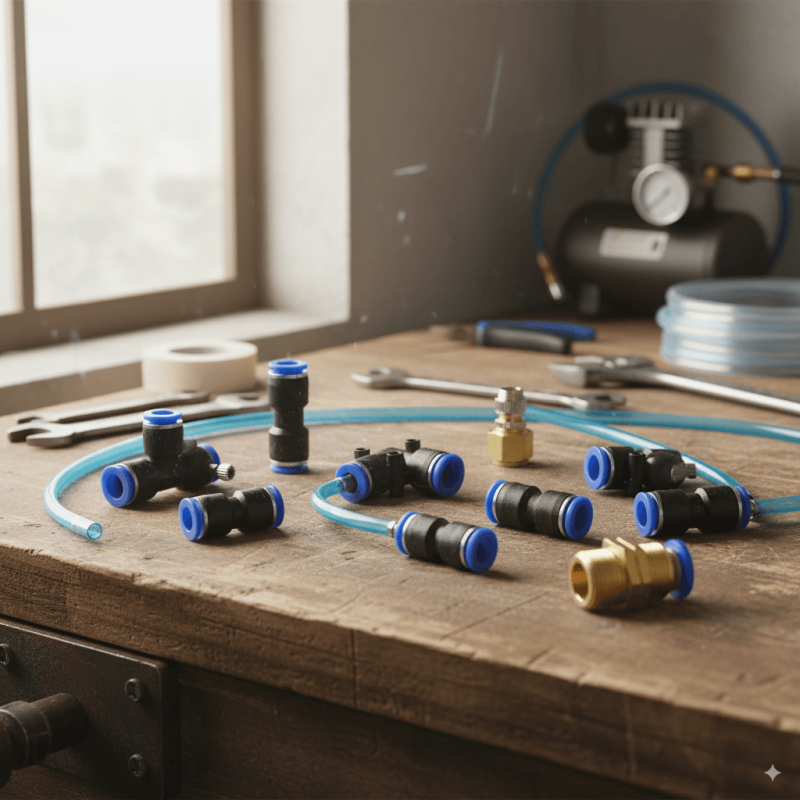
In every pneumatic system, compressed air travels through a network of tubes, hoses, valves, and actuators. To keep this airflow secure and efficient, you need reliable connectors — known as pneumatic fittings.
Pneumatic fittings are designed to connect different components in a compressed air system, ensuring leak-free performance, durability, and easy installation. With the right fittings, your system can run at optimal pressure, saving energy and extending equipment lifespan.
1. What Are Pneumatic Fittings?
Pneumatic fittings are mechanical connectors used to join sections of tubing, hoses, or other components within compressed air systems. They:
-
Ensure airtight connections under pressure
-
Allow quick assembly or disassembly
-
Maintain system efficiency by minimizing leaks
-
Adapt tubing to different sizes, materials, or thread types
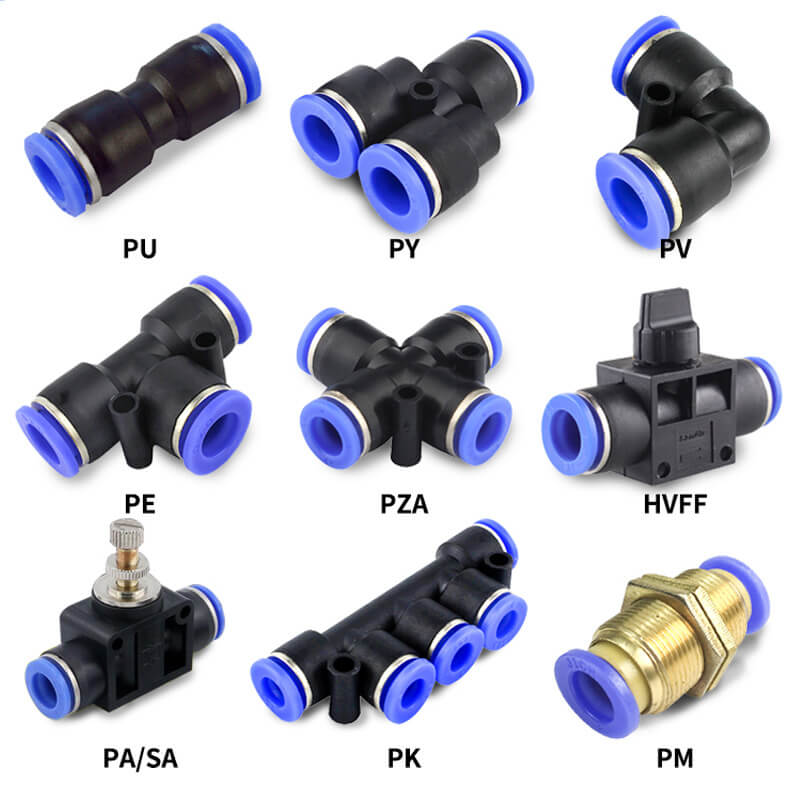
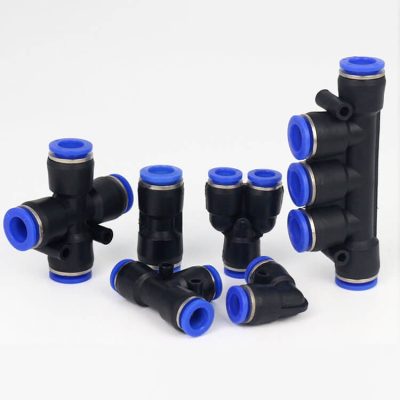
They are available in multiple shapes (straight, elbow, tee, cross, bulkhead) and thread standards (NPT, BSP, metric, UNF) to fit diverse industrial requirements.
2. Materials Used in Pneumatic Fittings
The performance of pneumatic fittings heavily depends on their construction material:
-
Brass
-
Good corrosion resistance
-
Suitable for general pneumatic applications
-
Cost-effective and durable
-
-
Stainless Steel
-
High strength, excellent resistance to corrosion and extreme environments
-
Used in food, beverage, chemical, and medical industries
-
-
Nickel-Plated Brass
-
Enhanced durability compared to plain brass
-
Good for medium to high-pressure applications
-
-
Plastic / Composite (PBT, Nylon, Polypropylene)
-
Lightweight and economical
-
Resistant to many chemicals
-
Common in push-to-connect fittings
-
-
Aluminum
-
Lightweight alternative, used in some industrial systems
-
3. Types of Pneumatic Fittings
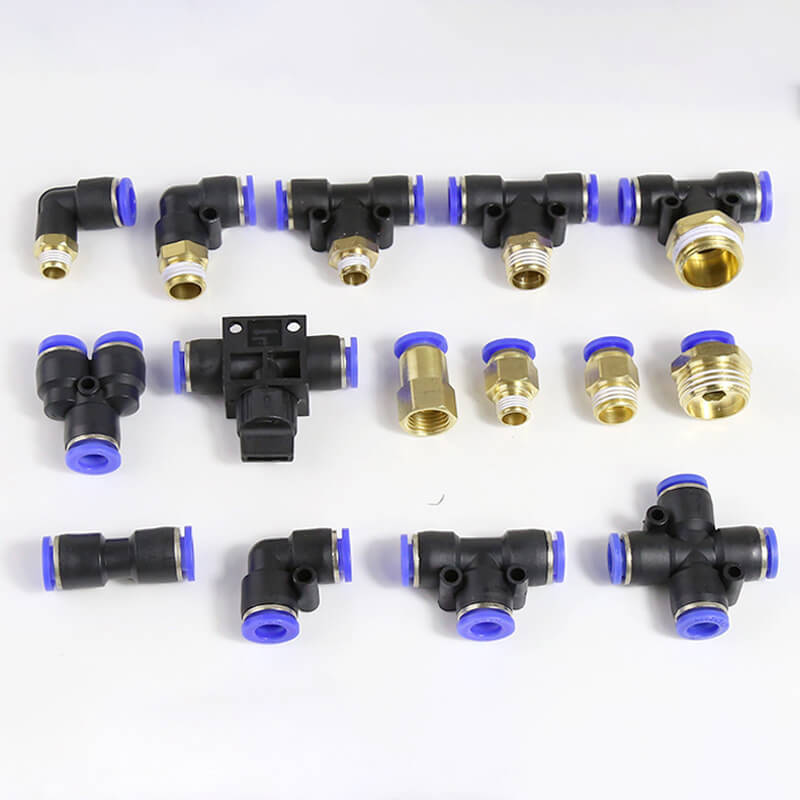
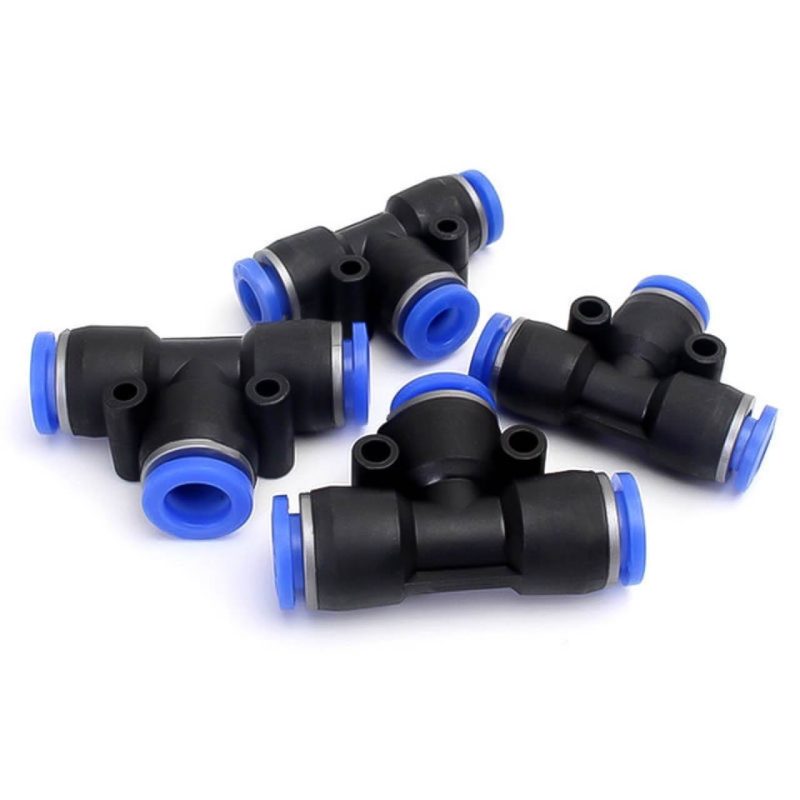
a) Push-to-Connect (Quick Connect) Fittings
-
Most popular type, designed for fast installation
-
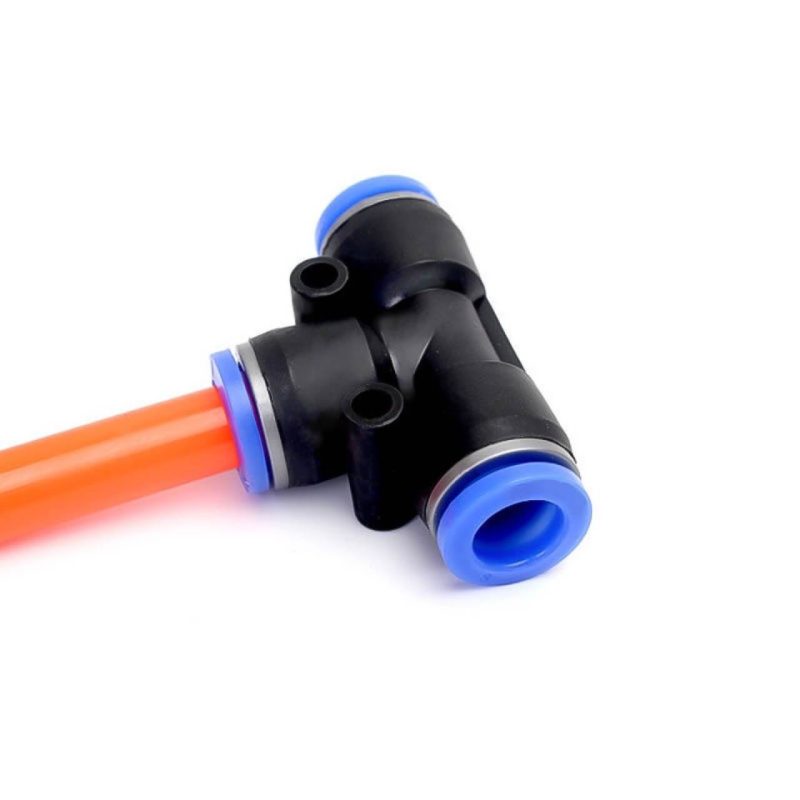
Simply push the tubing into the fitting; a locking mechanism secures it
-
Easy to disconnect by pressing the release ring
-
Used widely in automation, robotics, and packaging
b) Compression Fittings
-
Utilize a compression nut and ferrule to hold tubing tightly
-
Excellent for high-pressure applications and rigid tubing
-
Provide strong mechanical grip and minimal leaks
c) Threaded Fittings
-
Use standardized threads: BSPT, BSPP, NPT, metric
-
Ensure strong, permanent connections
-
Often combined with sealant tape or O-rings for leak-proof joints
d) Specialty Fittings (Directional & Reducing)
-
Elbows (45° or 90°): change direction of airflow
-
Tees & Crosses: split air supply to multiple lines
-
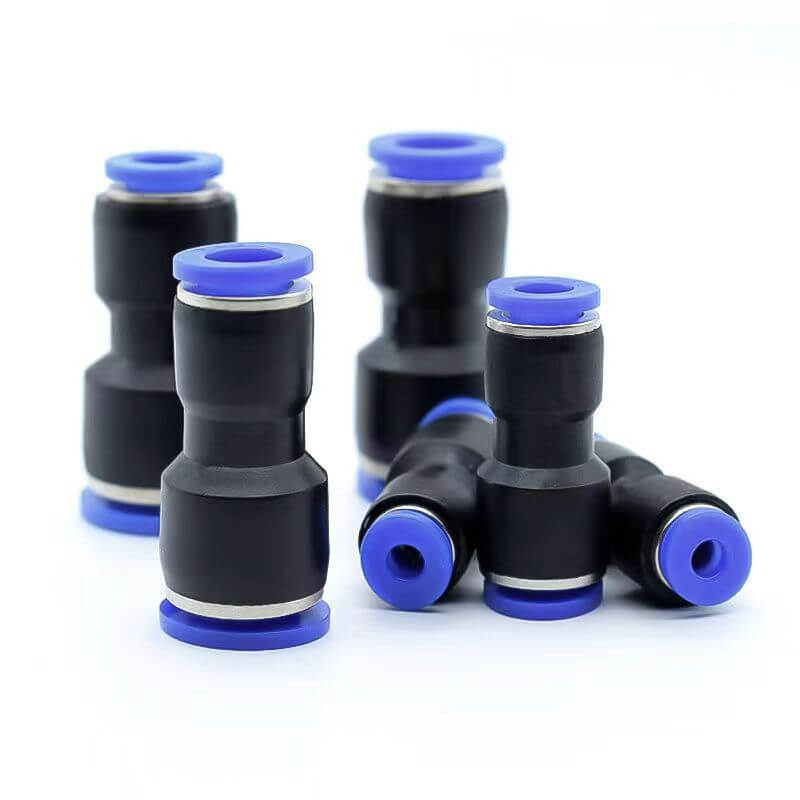
Reducers: connect different tube diameters
-
Bulkhead Fittings: allow tubes to pass through panels
-
Swivel Fittings: prevent tube twisting and provide flexibility
4. Applications of Pneumatic Fittings
Pneumatic fittings are essential in almost every industry that relies on compressed air:
-
Automation & Robotics
-
Actuator and cylinder connections
-
Air-driven tools and pick-and-place machines
-
-
Automotive Industry
-
Air brake systems, assembly lines, and spray painting equipment
-
-
Food & Beverage
-
Stainless steel or plastic fittings for clean, safe operations
-
-
Medical & Pharmaceutical
-
Small, precise air connections in lab equipment and respirators
-
-
Packaging & Printing
-
Fast-moving pneumatic circuits with multiple quick connections
-
-
General Industry
-
Powering air tools, lubrication systems, conveyors, and more
-
5. Advantages of Pneumatic Fittings
-
Quick installation & removal (especially push-to-connect types)
-
Leak-free performance, preserving system pressure
-
Versatility: wide range of sizes, shapes, and thread types
-
Durability: resistant to wear, corrosion, and chemicals
-
Reusable in many designs, reducing maintenance cost
-
Compact design suitable for tight installation spaces
6. Disadvantages or Limitations
While pneumatic fittings are reliable, they have certain limitations:
-
Not suitable for very high pressures compared to hydraulic fittings
-
Sensitive to improper installation (may cause air leaks)
-
Plastic versions may degrade under UV exposure or extreme heat
-
Thread mismatch (BSP vs NPT) can cause leaks or failures
7. How to Choose the Right Pneumatic Fitting
When selecting pneumatic fittings, consider:
-
Tubing Size – Match inner/outer diameter with fitting size
-
Thread Standard – Ensure compatibility (BSP, NPT, metric)
-
Material – Choose based on environment (steel for harsh, plastic for cost-effective use)
-
Pressure Rating – Verify maximum working pressure of fitting
-
Temperature Range – Some plastics soften in high heat, stainless steel performs better
-
Application – Quick-connect for automation, compression for high-pressure, stainless for food & chemical industries
8. Comparison Table of Pneumatic Fitting Types
| Fitting Type | Best For | Pros | Cons |
|---|---|---|---|
| Push-to-Connect | Automation, robotics, packaging | Fast install, reusable, compact | Limited for high-pressure systems |
| Compression | High-pressure, rigid tubing | Strong grip, minimal leaks | More installation time needed |
| Threaded | Permanent installations | Strong, reliable connection | Needs sealant, harder to remove |
| Elbow / Tee / Cross | Complex piping circuits | Flexible layout, multiple outputs | Takes up more space |
| Bulkhead / Swivel | Panel mounting, rotating joints | Prevents twisting, easy routing | More costly than standard fittings |
Final Thoughts
Pneumatic fittings are small but critical components that determine the efficiency, reliability, and lifespan of compressed air systems. By choosing the right type, material, and size, you can ensure safe operation, reduce energy losses, and improve system performance.
Whether you are working in industrial automation, automotive, food processing, or robotics, understanding pneumatic fittings is essential for building leak-free and efficient pneumatic systems.
