
 Tiếng Việt
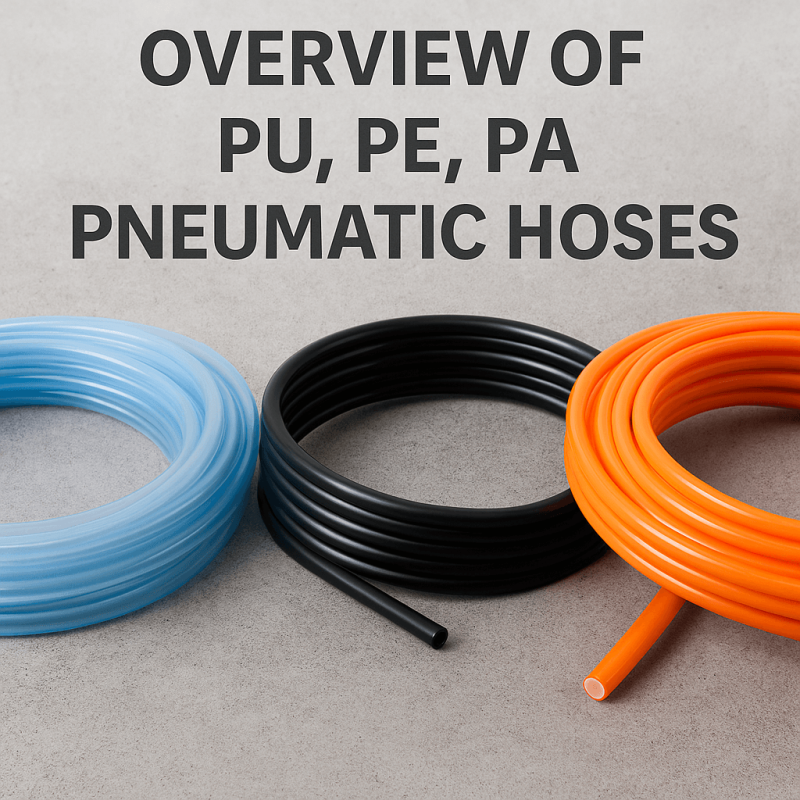
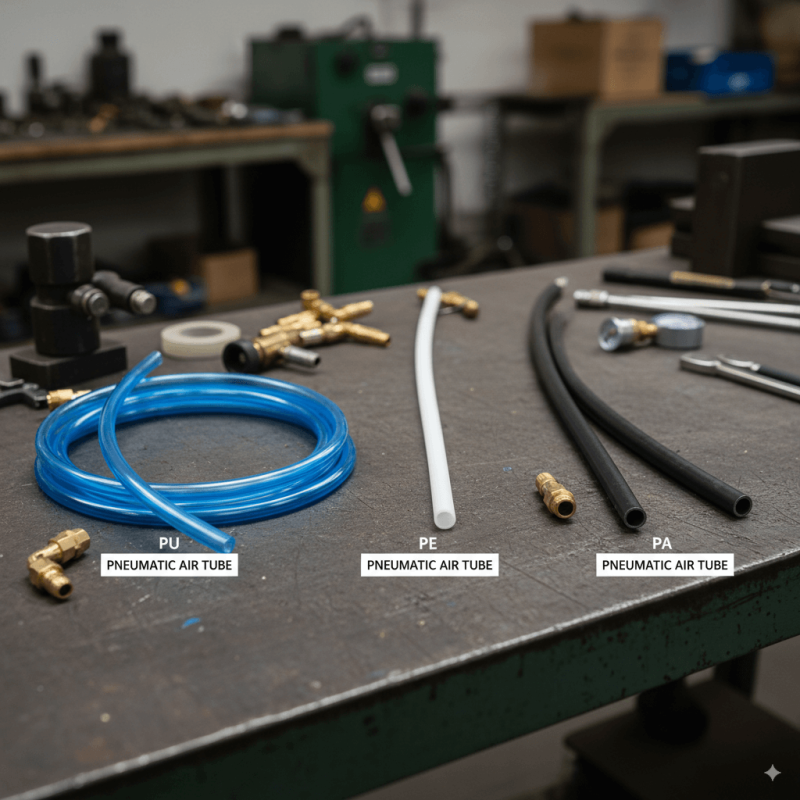
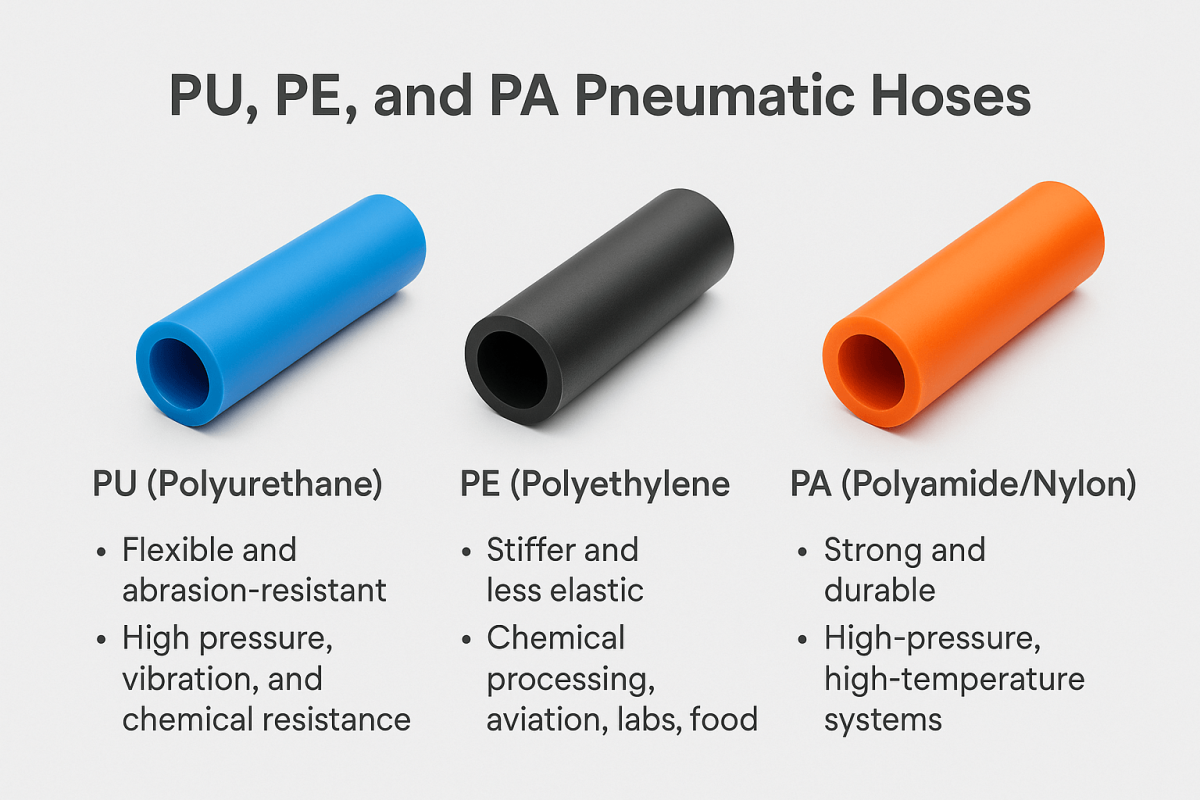
In pneumatic systems, choosing the right compressed air hose is essential for efficiency, durability, and safety. Among the most popular materials are PU (Polyurethane), PE (Polyethylene), and PA (Polyamide/Nylon). Each option provides unique benefits depending on the application, whether in industrial automation, automotive manufacturing, or fluid handling systems.
1. Overview of PU, PE, and PA Pneumatic Hoses
These hoses are widely used in robotics, pneumatic tools, lubrication systems, and assembly machinery. They are valued for their ability to withstand high pressure, vibration, abrasion, and chemicals while maintaining precise inner diameters for secure connections.
PU hoses are often available in multiple colors—transparent, red, yellow, black, blue, and green—making it easier to distinguish different lines in complex systems.
2. Why Choose PU (Polyurethane) Hoses?
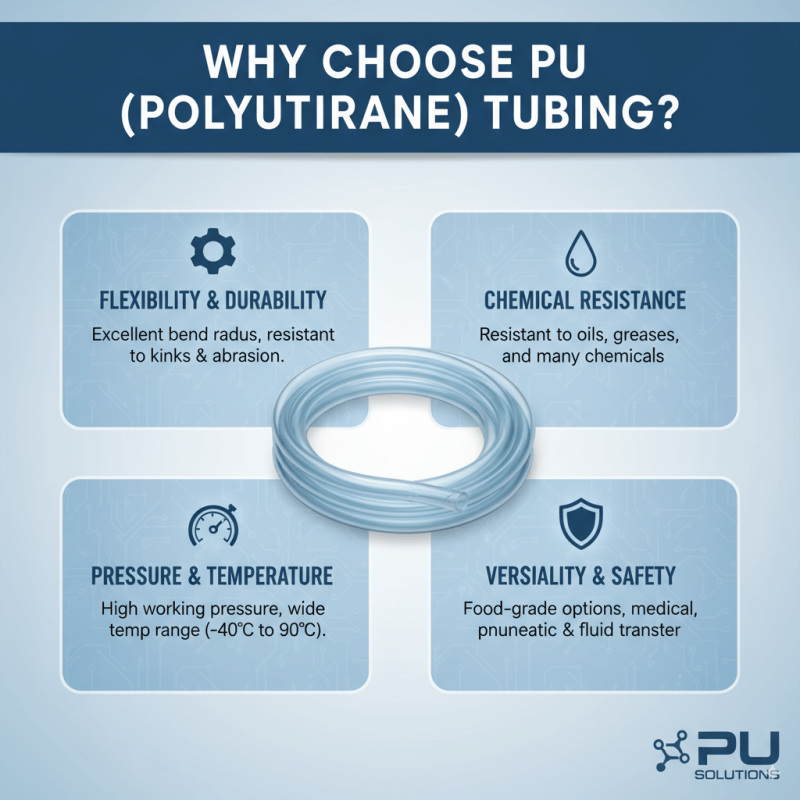
PU hoses are highly flexible, lightweight, and resistant to wear, making them ideal for dynamic environments.
Main features:
-
Excellent bend radius and flexibility
-
High abrasion and corrosion resistance
-
Stable pressure and minimal loss in long runs
-
Wide temperature and pressure tolerance
-
Non-toxic, odorless, and environmentally safe
Typical specifications:
-
Temperature range: −20 °C to +60 °C
-
Inner diameter options: 3 mm – 8 mm
-
Working pressure: up to 20 bar
3. PE (Polyethylene) Pneumatic Hoses
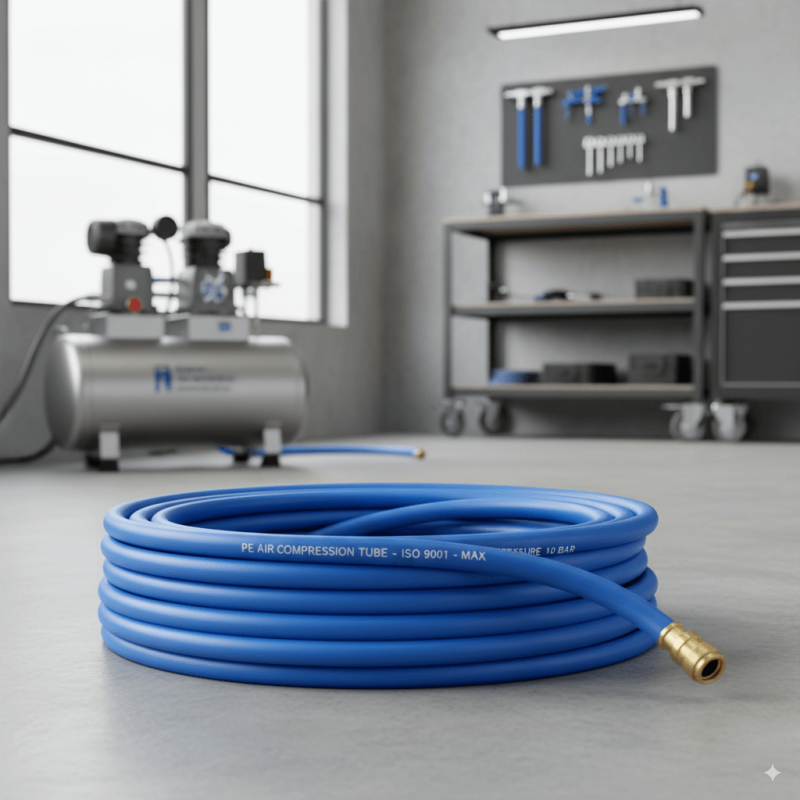
PE hoses share similar functions with PU but are generally stiffer and less elastic. Their strength lies in handling demanding environments, such as chemical processing, aviation, laboratories, and food production.
Key advantages:
-
Good chemical and moisture resistance
-
Non-toxic and odorless
-
Cost-effective and easy to process
-
Reliable in environments with fuel, oil, and dust exposure
4. PA (Polyamide/Nylon) Pneumatic Hoses
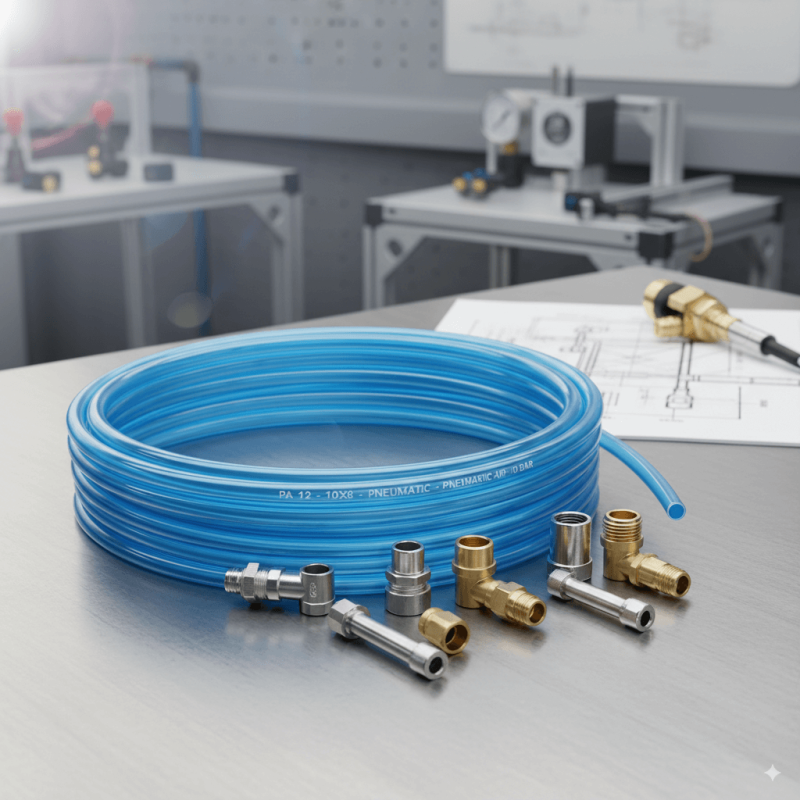
PA hoses, also known as nylon tubing, are strong engineering plastics designed for durability in high-pressure and high-temperature systems.
Key advantages:
-
Excellent mechanical strength and toughness
-
Resistant to abrasion, oils, and chemicals
-
Stable surface finish and precise dimensions
-
Available with reinforced options (fiberglass, flame-retardant, etc.)
Typical specifications:
-
Operating pressure: up to 19 bar
-
Burst pressure: approx. 57 bar
-
Temperature range: −40 °C to +100 °C
-
Outer diameter range: 3 mm – 16 mm
Applications include pneumatic braking, fluid transport, automotive air systems, and factory automation.
5. Advantages of PU Tubing in Industrial Use
PU tubing is a preferred choice thanks to its wide-ranging benefits:
-
Withstands high pressure
-
Lightweight and flexible
-
Superior abrasion resistance
-
Reliable across extreme temperatures
-
Chemical and oil resistance
-
Cost-efficient with long service life
-
Easy installation and maintenance
-
Compatible with standard fittings
-
Non-toxic and recyclable
-
Flame resistant and hygienic
Final Thoughts
Selecting the right pneumatic hose depends on your system requirements:
-
PU hoses: best for flexibility, lightweight applications, and abrasion resistance.
-
PE hoses: suitable for chemical resistance and stable operation in clean industries.
-
PA hoses: ideal for high-pressure, high-temperature, and heavy-duty environments.
By matching the right hose material to your application, you ensure maximum performance, safety, and cost savings in your pneumatic systems.
